Summary
Every battery pack contains mass that stores no energy. Enclosure, frame, cold plates, brackets, and fasteners routinely account for a large fraction of total pack weight, and in most architectures the structural system and the thermal system are designed separately, claim separate mass budgets, and are integrated late.
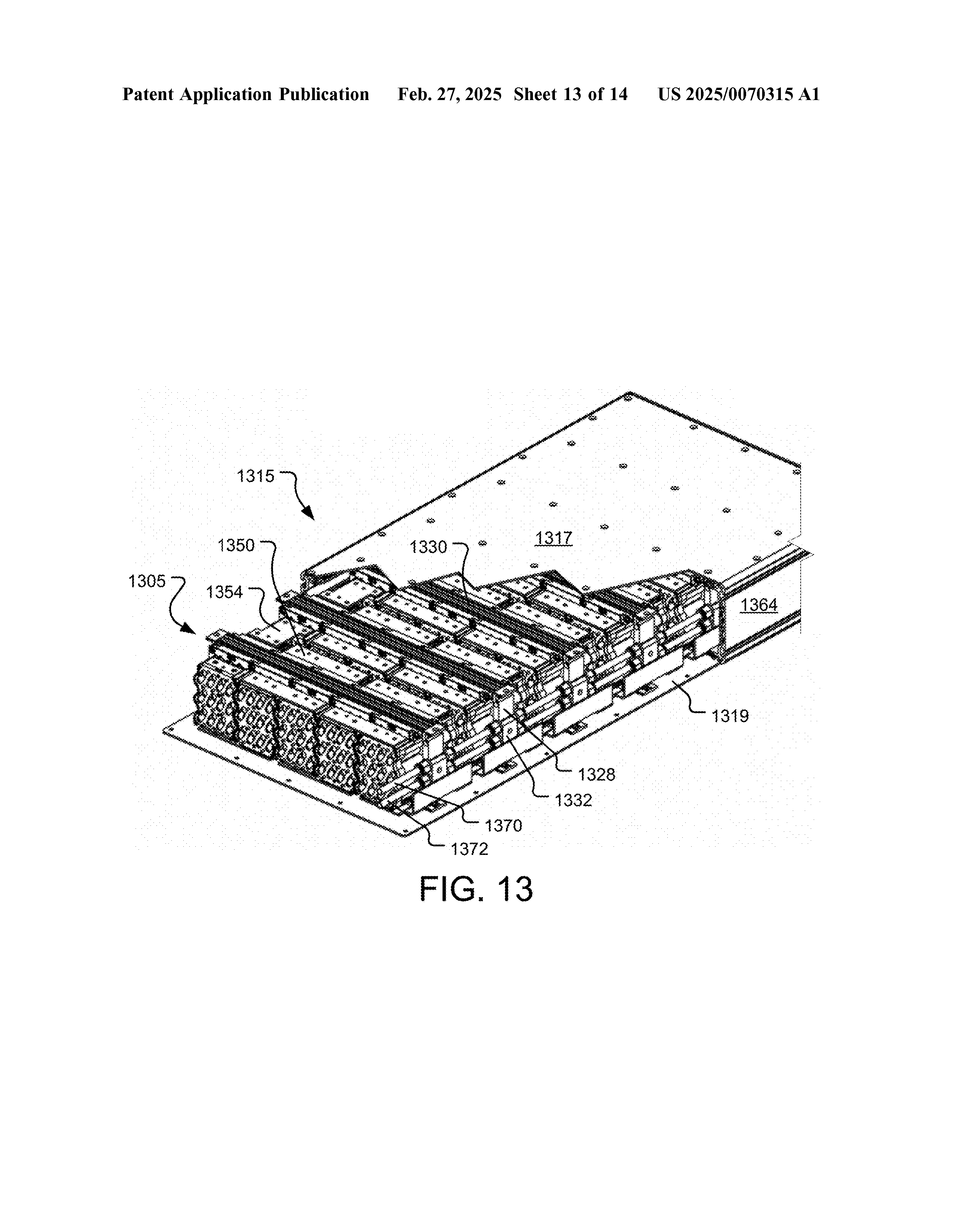
The MonoLith platform collapses that separation. A single extruded aluminum thermal plate serves as the load-bearing backbone of each battery sub-unit and as its liquid-cooled cold plate. Battery modules mount to lengthwise channels on both faces of the plate, held in compressive thermal contact with the same surfaces that carry structural load. Because the plate is an extrusion, its length is a free variable, which is what allows a small set of physical building blocks to serve energy targets from tens to hundreds of kilowatt-hours without structural redesign.
This paper describes the conventional structure-cooling split and its costs, the consolidated architecture, how it scales, what it means for service and program economics, and the real constraints the approach imposes. The architecture is the subject of a published patent application, cited at the end.
Figures depict the architecture as filed in August 2024 and may differ from current production configuration.
1.The Mass That Stores No Energy
A useful way to evaluate a pack architecture is to ask how much of it is battery. The industry metric is the gravimetric cell-to-pack ratio: total cell mass divided by total pack mass. Published teardown data and pack databases put conventional designs commonly in the range where cells account for roughly 60 percent of pack mass, with the remaining 40 percent consumed by enclosure, thermal management, battery management electronics, and interconnection. Aggregated pack data show the ratio of cell-level to pack-level energy density clustering near 0.62, which says the same thing from the energy side: integration overhead consumes something like a third of the energy density the cells offer.
The industry's response has been consolidation. Cell-to-pack and cell-to-chassis designs eliminate intermediate module structure and push cell mass fractions toward 85 to 90 percent in the best production examples. The direction of travel is clear: every kilogram that does two jobs is a kilogram that does not need to exist twice.
Most of that consolidation work has happened in high-volume automotive programs, where the engineering investment amortizes over hundreds of thousands of units. Low-volume and development programs have largely been left with the conventional split: a structural frame designed by one discipline, a cooling system designed by another, and an integration phase where the two negotiate for the same volume.
2.Two Subsystems, One Part
The MonoLith architecture applies the consolidation logic at a scale where it has historically been unaffordable, by making one decision early: the cold plate is the structure.
Each battery sub-unit is built around an extruded aluminum thermal plate, I-shaped in cross section, with internal coolant passages running its full length. The plate presents thermally conductive faces on both sides. Battery modules mount in rows on both faces, attached through lengthwise T-slot channels that hold each module in compressive thermal contact with the plate surface. The compressive attachment matters: the same mechanical joint that carries structural load is what guarantees the thermal interface, so structural integrity and thermal contact are not separate quality outcomes to verify. They are one outcome.
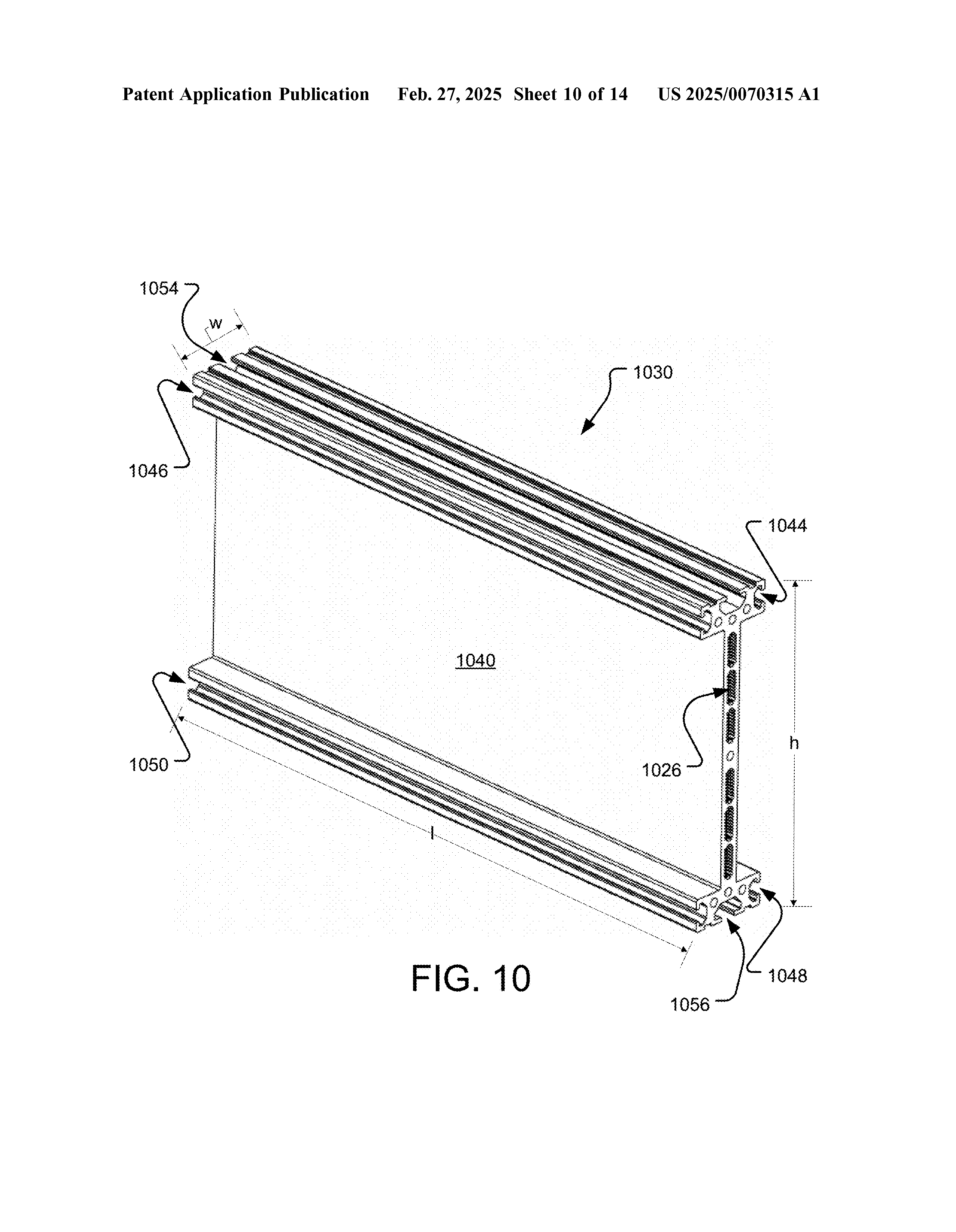
The I-section is not incidental. An I-beam concentrates material where bending stiffness demands it, and the web between the flanges is where the coolant passages live. The passages include internal surface finishing to increase coolant contact area, so the volume that provides structural depth is simultaneously the volume that provides heat exchange area. Nothing about the cross section is dedicated to only one function.
Mounting two rows of modules back to back on opposing faces has a second-order benefit worth naming: the plate is loaded symmetrically. Thermal expansion and mechanical loads from the two module rows oppose each other across the web rather than bending the plate in one direction.
3.Length as a Free Variable
The consolidation would be a curiosity if it did not change how the pack scales. It does, because of what an extrusion is.
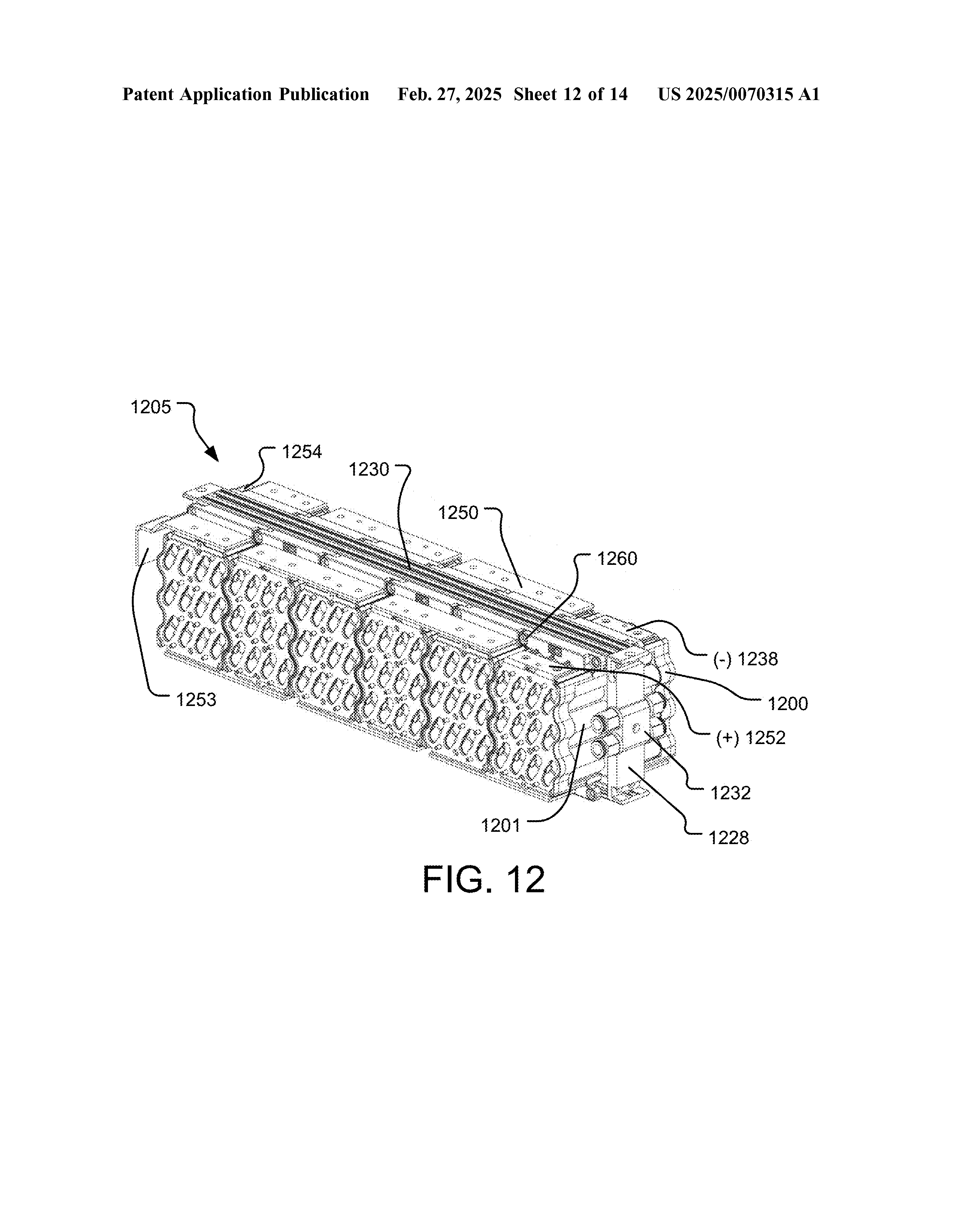
An extruded profile has a fixed cross section and an arbitrary length. Once the die exists, a plate of any length costs the same per meter, carries the same coolant passages, and presents the same mounting channels. Because modules attach along continuous lengthwise channels rather than to discrete mounting features, module count per plate is set by plate length, not by tooling. A program that needs more energy specifies a longer plate and more modules. The cross section, the module design, the thermal interface, the manifolds, and the attachment method are all unchanged.
This is the mechanical fact underneath the platform's configuration space. Energy scales along the plate axis. Voltage scales through module series configuration. Capacity scales through parallelization and sub-unit count. None of these axes requires new structural engineering, which is why a large variant catalog can exist without a correspondingly large tooling catalog.
Scaling continues at the next level of assembly. Sub-units mount side by side along rails, and their coolant connections are deliberately linear: end cap manifolds at the plate ends align so that supply and return runs are straight tubing sections that extend as sub-units are added. The plumbing scales the same way the structure does, by getting longer rather than by getting redesigned.
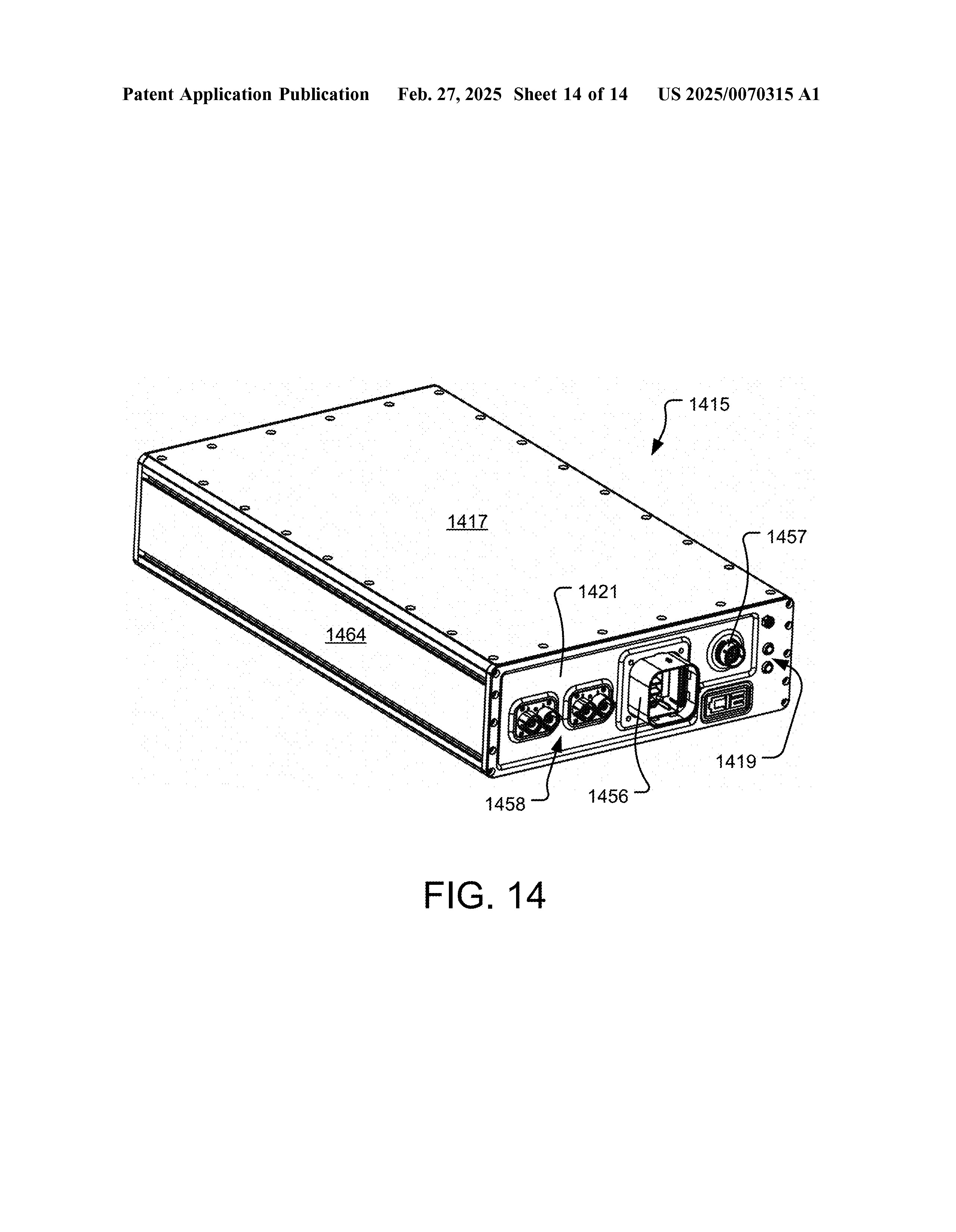
Structural panels then close the assembly. Panels attach top and bottom into the same T-slot channel system, through connectors in the thermal plates themselves, stiffening the assembled group of sub-units and enclosing them against contamination and contact. End caps complete the enclosure. The panels are not an afterthought; they are the members that tie the parallel plates into a single torsionally stiff assembly, a point revisited in the trade-offs section.
4.What Serviceability Is Actually Worth
Because modules attach to open channels rather than being captured inside a welded or bonded structure, individual modules and entire sub-units can be removed and replaced without disassembling the pack. The mounting rail arrangement preserves access, and the linear coolant runs mean a sub-unit can be disconnected without disturbing its neighbors' plumbing.
For a production automotive pack, field-level module replacement is a minor consideration; packs are replaced as units and economics are driven by volume. For the programs this platform serves, the calculus is different in two specific ways.
In Development, the Pack Is a Moving Target
Prototype programs change their minds. Energy targets shift as vehicle mass converges, voltage targets shift as drivetrain components are selected, and test campaigns damage hardware. An architecture where a module swap is a workshop task rather than a return-to-factory event, and where a capacity change is a plate-length change rather than a redesign, converts each of those disruptions from a schedule event into a maintenance event.
In Fleets, Commonality Is Inventory
A fleet running multiple vehicle types on one module building block services all of them from one spare pool. The alternative, a distinct pack design per vehicle type, multiplies spares, documentation, and technician training by the number of designs.
5.Program Economics
The conventional cost of a ground-up pack structure for a low-volume program is spread across mechanical design of the frame and enclosure, thermal design of the cooling system, the analysis loop where the two are reconciled, prototype tooling, and validation of the integrated result. Much of that work is not reusable: it is specific to one energy target, one envelope, one program.
The consolidated architecture moves most of that engineering into the platform, where it is done once. What remains program-specific is configuration: plate length, module count and series arrangement, enclosure selection, and interfaces. This is the difference between designing a structure and specifying one, and it is why the platform's deployment timeline is measured in weeks where ground-up development is measured in quarters.
A structural point sits underneath the economic one. Because the load path and the thermal path run through the same validated part, the platform's structural validation and thermal validation travel with it from program to program. A ground-up design revalidates both, every time.
6.Trade-Offs and Constraints
Consolidation is not free. Four constraints are inherent to this approach.
The Cross Section Is Frozen
Extrusion makes length free precisely by making the cross section fixed. Scaling in height or width, to accommodate a taller module or a different cell format, means a new die and a requalified plate. The architecture is therefore deliberately opinionated: it scales superbly along one axis and resists change along the other two. Programs whose packaging demands a different cross section are asking for a different platform, not a longer plate.
Energy Comes in Steps
Because capacity is added in whole modules and whole sub-units, achievable energy is quantized. A program with a hard mass or energy ceiling that falls between steps must round down. Fine-grained energy targeting is the province of custom design; a modular platform trades that granularity away for speed and commonality.
Structure and Cooling Now Share a Failure Domain
In a conventional pack, a cooling fault and a structural fault are independent events in separate parts. Here the plate is both, so its design margins must satisfy both disciplines simultaneously, including their interactions: coolant pressure and temperature cycling occur in a member that is also carrying structural load and vibration. The engineering answer is that the plate is analyzed and validated for the combined duty, but the honest statement is that consolidation concentrates criticality into fewer parts, and those parts must be treated accordingly.
Torsional Stiffness Is Assembled, Not Intrinsic
A row of parallel I-section plates is stiff in bending along each plate but depends on the attached structural panels and end connections for torsional rigidity as an assembly. The panels are structural members, not covers. Applications with severe torsional inputs need the panel attachment treated as a primary load path in integration analysis, and the pack cannot be operated structurally open.
7.Where This Applies
The architecture fits programs where engineering time is the scarce resource and requirements are still in motion: prototype and development vehicles, low-volume specialty platforms, and fleets that value commonality across mixed vehicle types. It fits applications that can accept quantized energy steps in exchange for configuration speed, and envelopes compatible with a fixed cross section scaled in length.
It is not a cell-to-chassis production architecture, and does not claim to be. High-volume programs with frozen requirements will always extract more from a bespoke integrated design. The argument here is narrower and, for its intended user, more useful: the consolidation benefits that high-volume programs obtain through program-specific engineering can be obtained at development scale through architecture instead.
Patent Status
The architecture described in this paper is the subject of U.S. Patent Application No. 18/814,733, published as U.S. Patent Application Publication No. 2025/0070315 A1 on February 27, 2025, titled Modular Battery Pack with Liquid-Cooled Thermal Plates, and Canadian Patent Application No. 3,253,125. Both applications are pending. The applications were filed under the company's former name, CIE Solutions LLC.
References
- "Cell to Pack Mass Ratio." Battery Design (batterydesign.net), pack teardown database.
- "Pack Mass from Cell Density." Battery Design (batterydesign.net), cell and pack gravimetric energy density dataset.
- U.S. Patent Application Publication No. 2025/0070315 A1, Modular Battery Pack with Liquid-Cooled Thermal Plates, published February 27, 2025.
About EVolve Battery Systems
EVolve Battery Systems designs and manufactures custom lithium-ion energy storage systems in Boulder, Colorado. Founded in 2014 as a prototype engineering firm focused exclusively on bespoke battery systems, the company launched the MonoLith platform in 2025. Design, manufacturing, and R&D are performed in Boulder.
Engineering inquiries: +1 (720) 414-5502 | evolvebattery.us