Summary
Cylindrical lithium-ion cells conduct heat far better along their axis than through their radius. Most pack architectures nonetheless extract heat radially, through the cell sidewall, because both cell terminals conventionally occupy the axial ends and leave no room for a thermal interface. The result is a cooling path that runs through the most thermally resistive direction the cell offers.
The MonoLith platform takes the opposite approach. Both electrical contacts are co-located at a single axial end of the cell, which frees the opposite axial end to sit in direct thermal contact with a liquid-cooled plate. That plate also serves as the structural backbone of the assembly, which removes the usual distinction between the cooling system and the pack chassis.
This paper describes the thermal physics that motivates the architecture, the design constraint it resolves, the system-level consequences, and the trade-offs it introduces. The architecture is the subject of a published patent application, cited at the end.
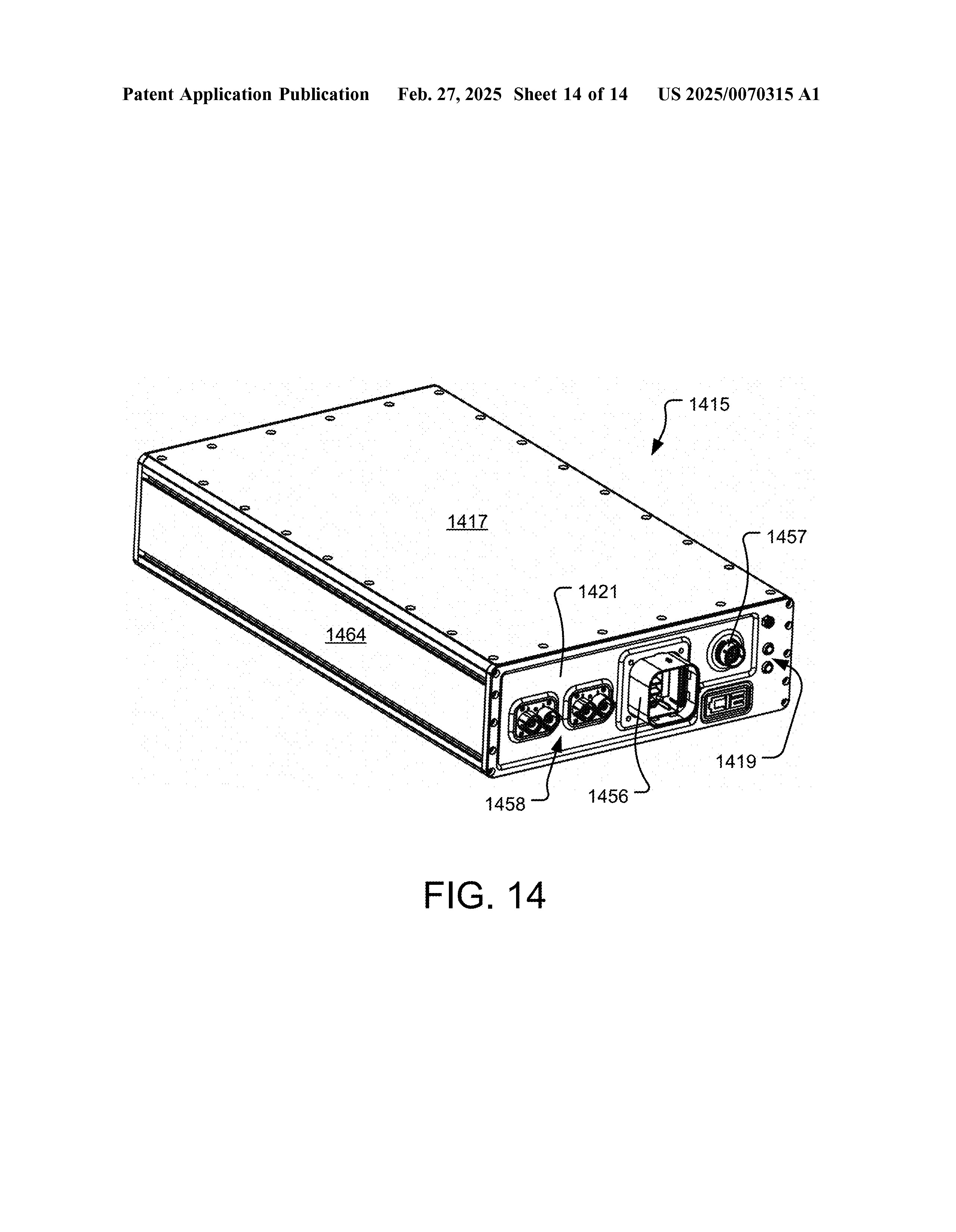
Figures depict the architecture as filed in August 2024 and may differ from current production configuration.
1.The Anisotropy Problem
A cylindrical lithium-ion cell is not a thermally uniform object. Its internal structure is a spiral wound assembly, commonly called a jelly roll, formed by rolling long strips of anode foil, cathode foil, and separator into a cylinder. This construction is what gives cylindrical cells their high active surface area and low internal resistance, and it is also what makes their thermal behavior strongly directional.
The mechanism is straightforward. Heat traveling along the cell axis, or circumferentially around the winding, moves parallel to the layers. It travels through continuous metal foil, which conducts well. Heat traveling radially, from the center of the roll outward toward the can wall, must cross every layer interface in the stack: foil, separator, electrolyte, foil, and so on, dozens of times. Each interface adds contact resistance, and the separator and electrolyte are poor conductors to begin with.
The measured consequence is large. Published measurements of cylindrical cells consistently report radial thermal conductivity between roughly one and two orders of magnitude below axial conductivity, depending on cell format, chemistry, and measurement technique. Drake et al. reported radial conductivity approximately two orders of magnitude below axial for 18650 and 26650 cells. Modeling literature commonly treats the jelly roll as a homogenized anisotropic solid for precisely this reason, because ignoring the anisotropy produces substantially wrong peak temperature predictions.
For a pack designer, this is not an academic detail. It means the cell is presenting two very different thermal paths, and the choice of which one to use has a first-order effect on how well the pack manages heat.
2.Why Most Packs Cool the Resistive Direction Anyway
Given the above, extracting heat axially is the obvious choice. Most designs do not, and the reason is geometric rather than thermal.
In a conventional cylindrical cell, the positive terminal is the top cap and the negative terminal is the can, with the can bottom serving as the accessible negative contact surface. Interconnection therefore happens at both ends: busbars or welded tabs at the top for positive, and at the bottom for negative. Both axial ends are consumed by electrical connection hardware.
That leaves only the sidewall available for thermal contact. So the designer, having no other option, routes the cooling path through the radial direction, which is the worst-conducting direction the cell has. Cold plates run alongside the cells, or coolant flows through the interstitial space, or thermally conductive potting fills the gaps.
These approaches work. They are used successfully in production vehicles. But they are compensating for a geometric constraint, not optimizing for the cell's thermal physics.
3.Freeing the Base
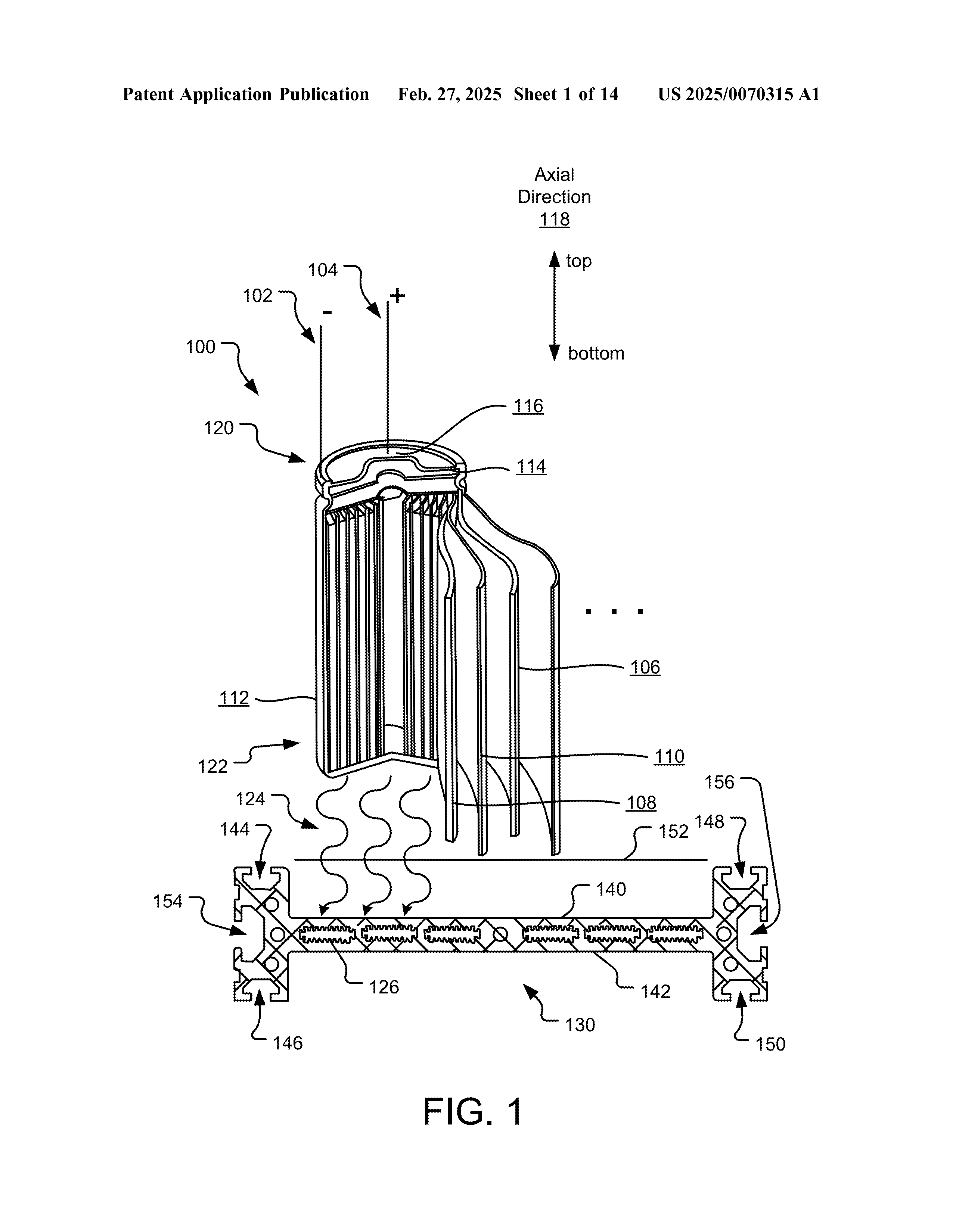
The MonoLith architecture resolves the constraint by moving both electrical contacts to the same axial end.
The negative contact connects to the top rim of the cell can. The positive contact connects to the center portion of the top cap. The two are separated by the cell's existing gasket. Because the can is electrically continuous, contacting it at the top rim is electrically equivalent to contacting it at the base, so no modification to standard cell construction is required.
With both contacts at the top, the entire bottom axial end of every cell becomes available. Cells are seated with their bases against a thermally conductive surface, with a thermal interface layer between the cell base and the plate to accommodate surface irregularity and ensure consistent contact.
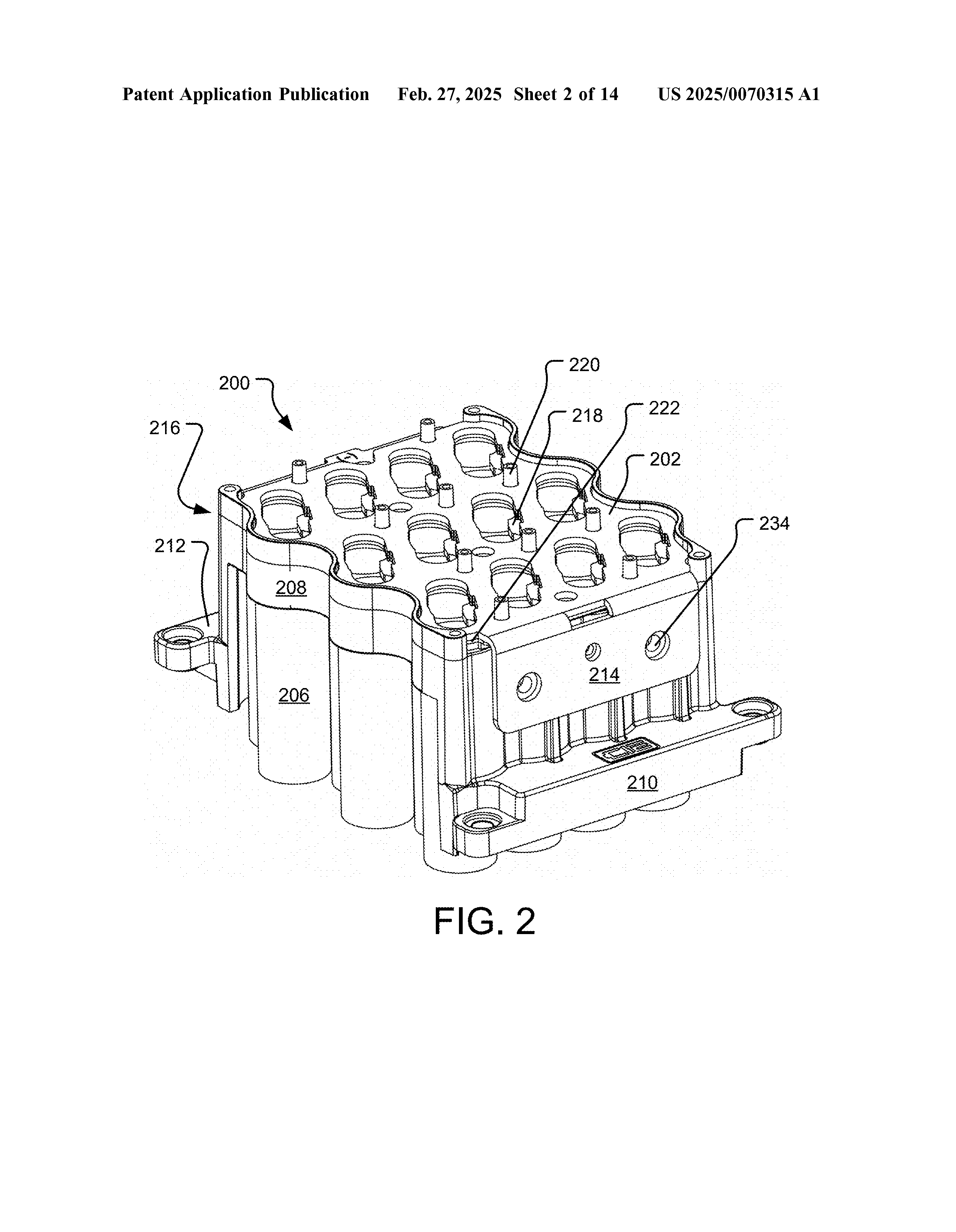
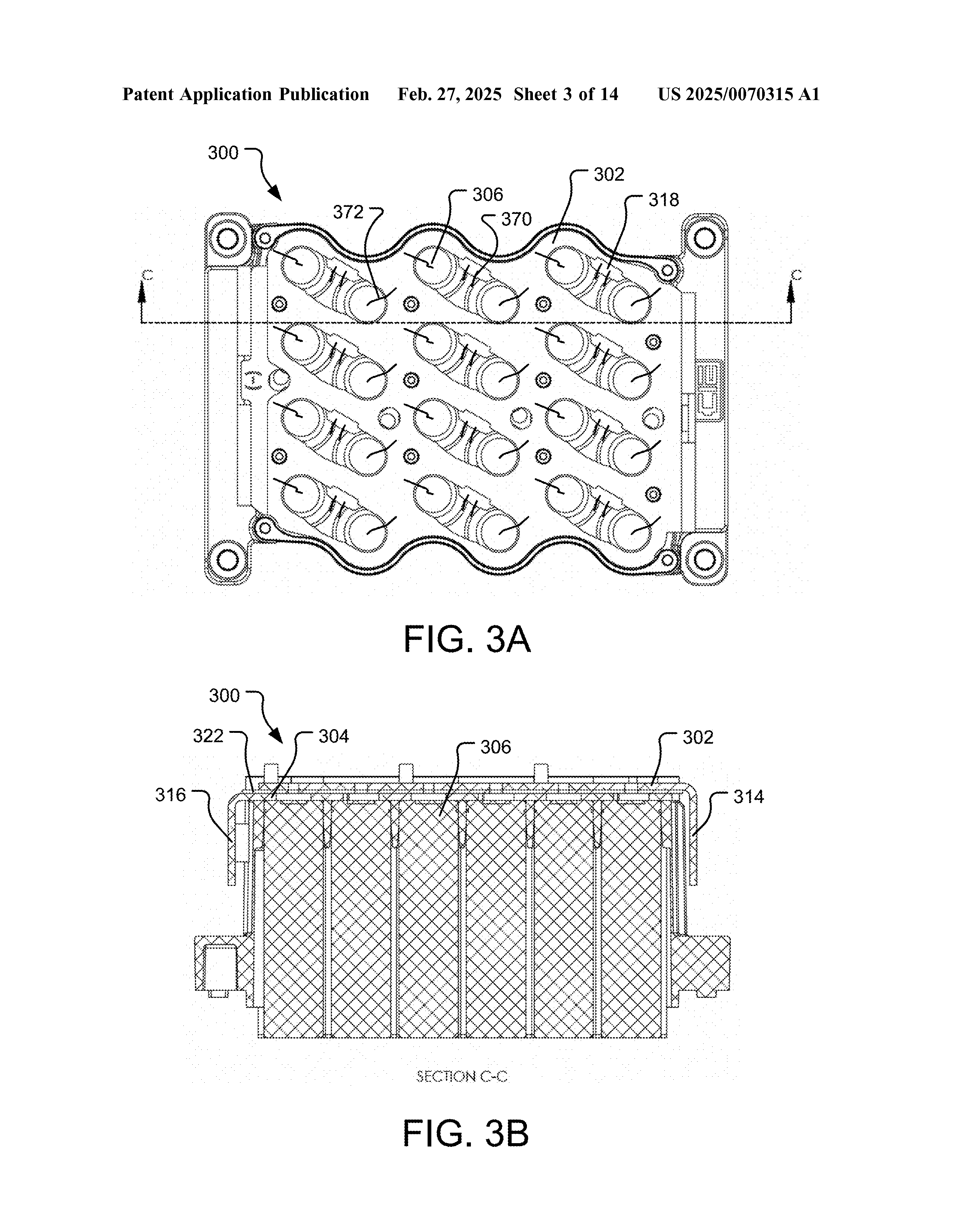
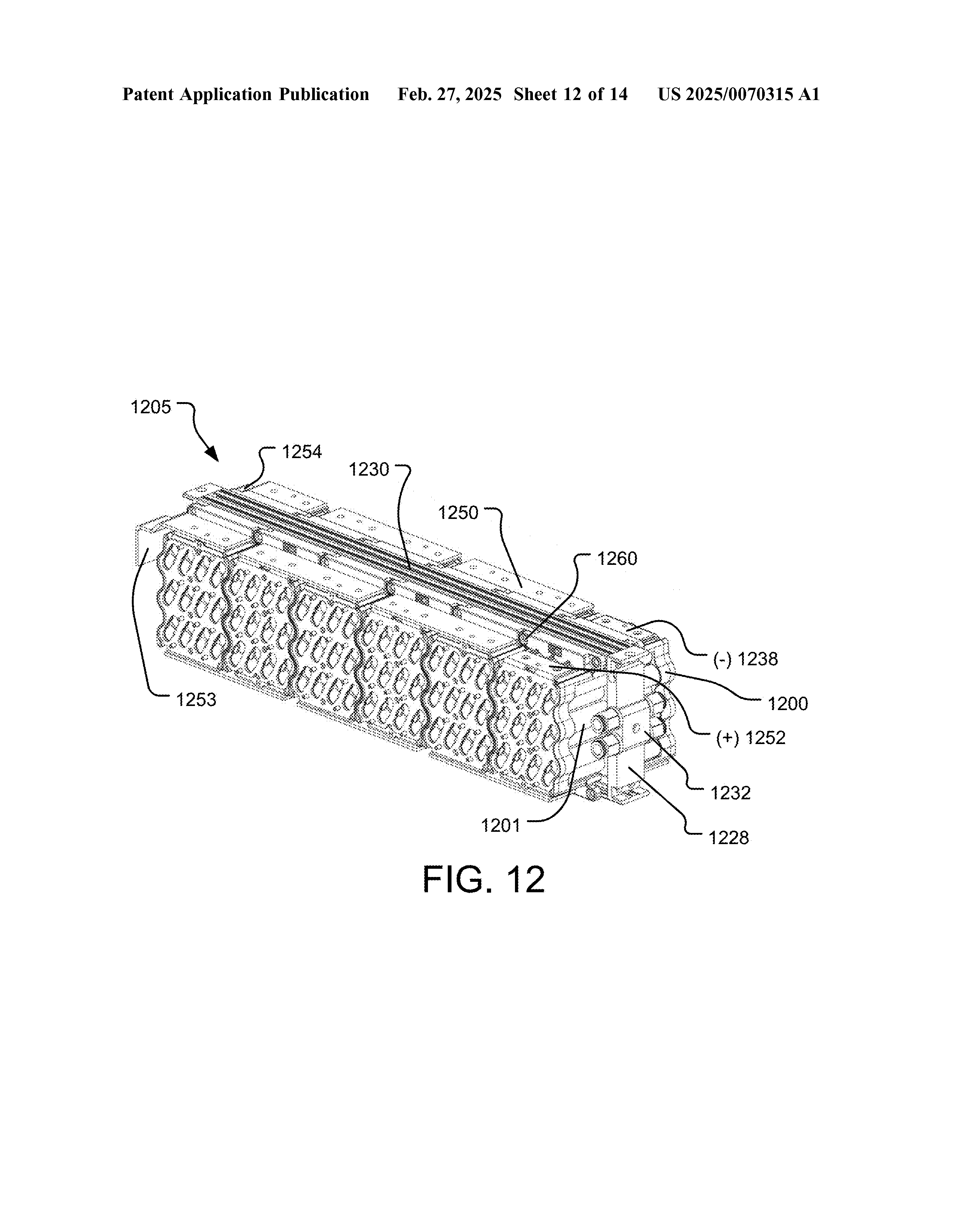
Interconnection at the top is handled by collector plates that overlie the cell terminals and are ultrasonically wire bonded to them. Because the collector plates are planar and the terminals are co-planar, a single collector plate assembly can address every cell in a module, and multiple electrically isolated collector plates can address different subsets of cells to configure series and parallel arrangements without changing the mechanical design.
4.The Plate as Structural Backbone
Once the cell bases are the thermal interface, the surface they sit against can be given a second job.
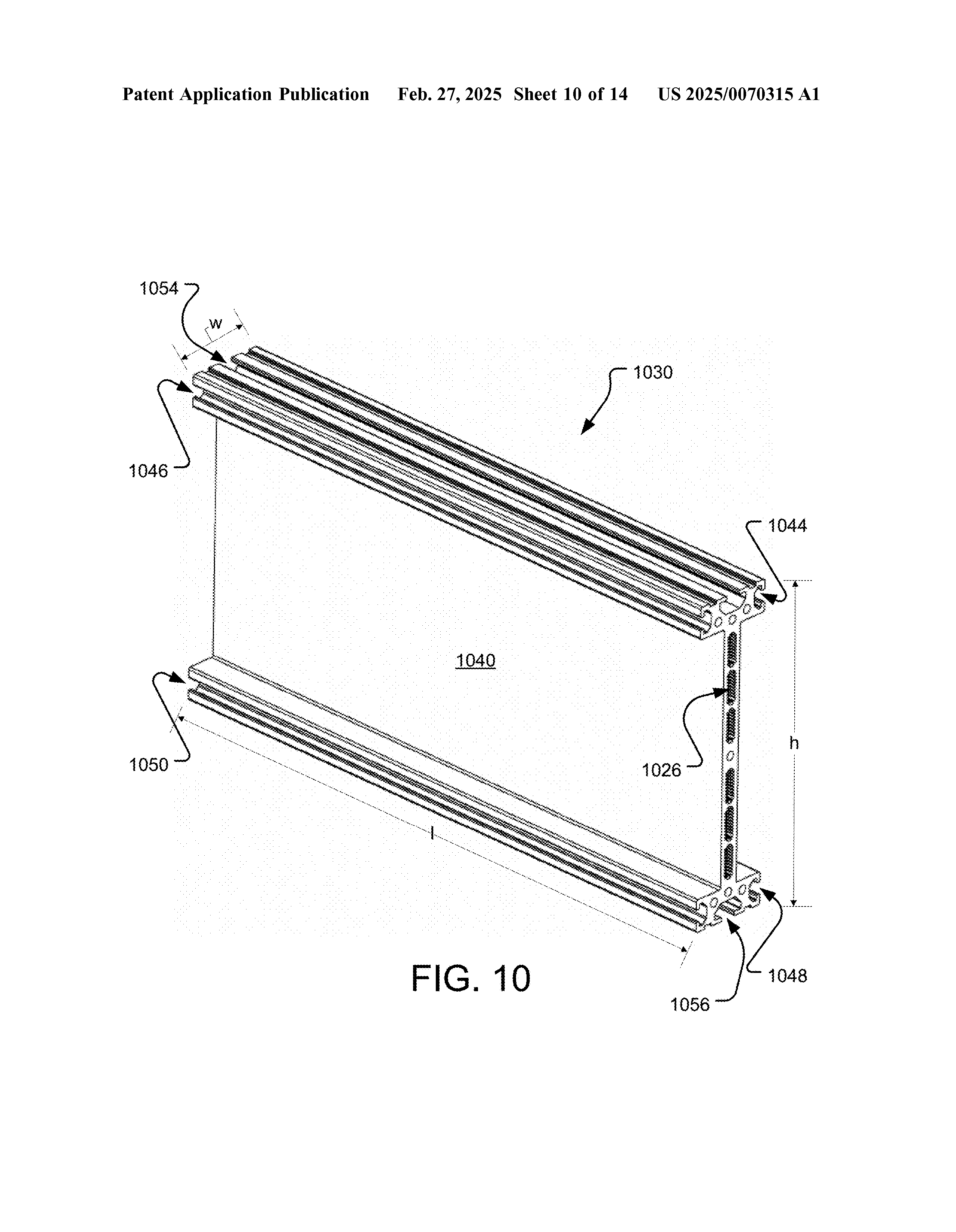
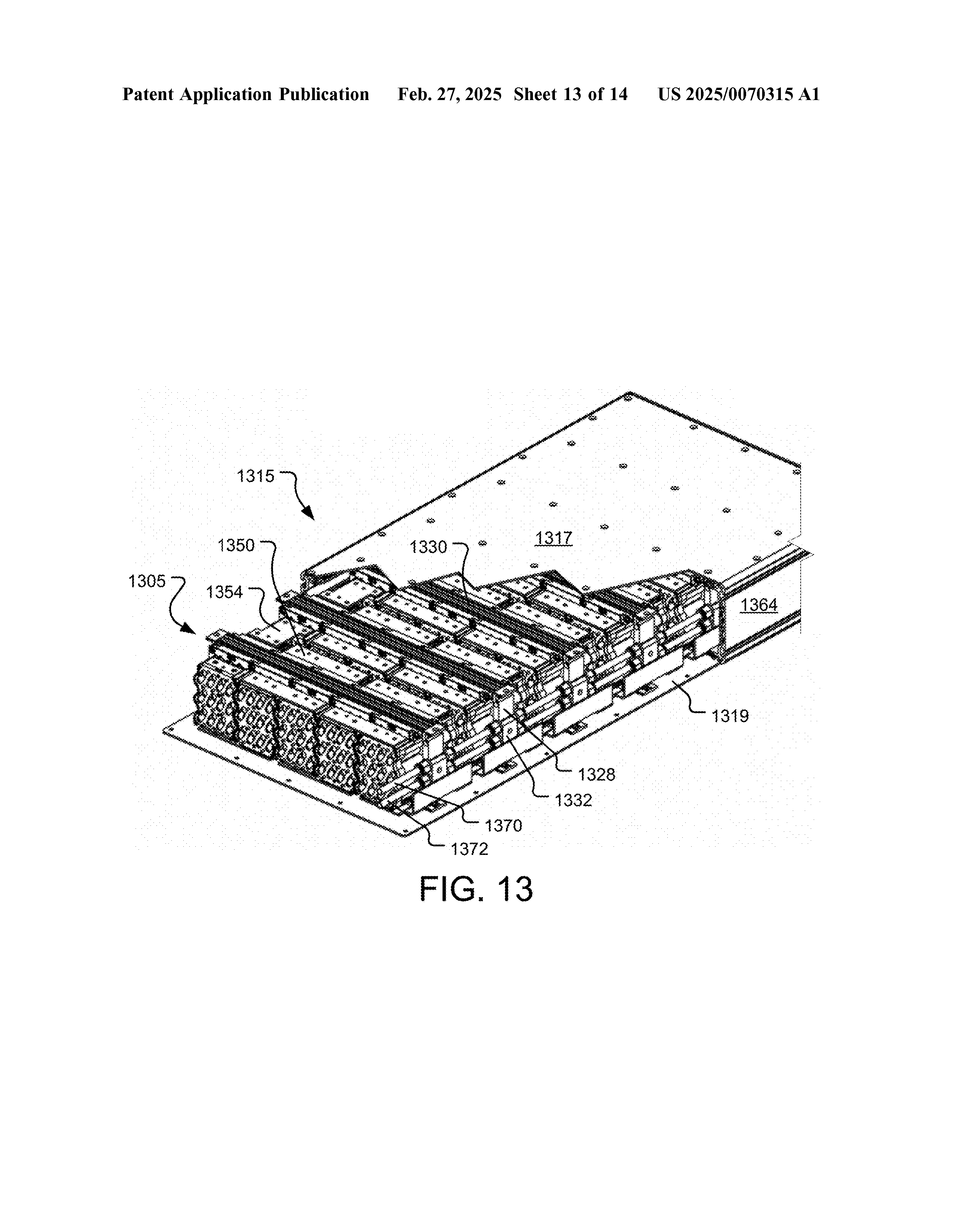
In the MonoLith architecture, the thermal plate is not a component bolted into a chassis. It is the chassis. The plate is I-shaped in cross section, carries internal coolant passages along its length, and presents thermally conductive faces on both sides so that two rows of modules can be mounted back to back on a single plate. Mounting channels run lengthwise down each face, and modules attach to those channels in a way that holds them in compressive thermal contact with the plate face.
This consolidation has several consequences that matter more at the system level than at the component level.
Length Is a Free Variable
Because modules attach along continuous lengthwise channels rather than to discrete mounting features, the plate can be made whatever length a given energy requirement demands. Adding capacity means a longer plate and more modules, not a redesigned structure.
Structural Mass Does Double Duty
In a conventional pack, the cold plate and the structural enclosure are separate mass allocations. Combining them removes one of those allocations from the mass budget without reducing stiffness.
Assembly & Service Simplify
Modules attach to channels rather than to a surrounding frame, so individual modules can be removed and replaced without disassembling the full pack. This changes the cost of a cell-level failure from a pack replacement to a module swap.
5.System-Level Consequences
Two further characteristics follow from the architecture rather than being added to it.
Coolant Flow Balancing
End cap manifolds attach to the ends of each thermal plate and distribute coolant into the internal passages. The manifold fittings are rotatable, changing the effective orifice size and therefore the flow rate into that plate. When several sub-units share a common coolant supply and return, individual sub-units can be throttled to balance flow and equalize temperature across the assembly, without redesigning the plumbing or adding external control valves.
Vent Path Separation
Cylindrical cells vent through the top, where the terminals are. In this architecture the top is also where all electrical interconnection lives, and the bottom is dedicated to cooling. When two sub-units are mounted facing each other in a pack, that orientation points their vent paths at each other. Isolation plates placed between facing sub-units block a venting cell from directing its discharge at cells in the opposing sub-unit, which reduces the likelihood, or at minimum slows the progression, of cell-to-cell cascade.
This is worth stating plainly: the vent isolation opportunity exists because the architecture already separates the electrical plane from the thermal plane. It is a consequence of the layout rather than a component added to fix a problem the layout created.

6.Trade-Offs and Constraints
An architecture paper that lists only advantages is a brochure. Three honest constraints come with this approach.
Contact Area Is Smaller
A 21700 cell presents a base cross section of roughly 346 mm². Its full sidewall area is roughly 4,600 mm², about thirteen times larger. Axial cooling therefore trades a large-area, low-conductivity path for a small-area, high-conductivity one. The trade is favorable because the conductivity difference is larger than the area difference, but it is a trade, and it means the quality of the base-to-plate interface matters a great deal. In sidewall cooling, mediocre contact over a large area still moves heat. Here, interface quality is not forgiving.
In practice the comparison is less lopsided than the raw geometry suggests, because sidewall cooling against a flat plate achieves near-line contact rather than full-area contact unless conforming material or potting is used, and that material introduces its own thermal resistance. But the designer should size the interface deliberately rather than assume the axial path is strictly superior on every axis.
The Interface Must Be Dielectric
Because the can is the negative terminal, the cell base sits at cell negative potential. The thermal interface layer between cell base and plate must therefore be electrically insulating while remaining thermally conductive, and it must maintain that isolation over the pack's life across thermal cycling and vibration. This is a standard requirement in the industry, but it is a real material selection constraint and it forecloses the simplest and highest-performing thermal interface options.
Interconnection Is Process-Dependent
Bringing both terminals to one plane means both connections are made by wire bonding rather than by conventional busbar welding. Wire bonding brings genuine advantages, including redundant current paths, no thermal stress on the cell terminal during joining, and straightforward rework. It also requires ultrasonic bonding capability and process control that not every manufacturer has in house.
7.Where This Applies
The architecture suits applications where volumetric packaging is constrained, where thermal uniformity across a large cell count matters, and where field serviceability has real value. Development and prototype programs benefit specifically from the configuration flexibility, since energy and voltage targets frequently move during a program and the plate-length variable absorbs those changes without a structural redesign.
It suits high-cell-count cylindrical architectures better than low-count or large-format prismatic designs, where the anisotropy argument does not apply in the same form.
Patent Status
The architecture described in this paper is the subject of U.S. Patent Application No. 18/814,733, published as U.S. Patent Application Publication No. 2025/0070315 A1 on February 27, 2025, titled Modular Battery Pack with Liquid-Cooled Thermal Plates, and Canadian Patent Application No. 3,253,125. Both applications are pending. The applications were filed under the company's former name, CIE Solutions LLC.
References
- Drake, S.J., et al. "Measurement of anisotropic thermophysical properties of cylindrical Li-ion cells." Journal of Power Sources, 2014.
- Drake, S.J., et al. "Novel 18650 lithium-ion battery surrogate cell design with anisotropic thermophysical properties for studying failure events." Journal of Power Sources, 2016.
- U.S. Patent Application Publication No. 2025/0070315 A1, Modular Battery Pack with Liquid-Cooled Thermal Plates, published February 27, 2025.
About EVolve Battery Systems
EVolve Battery Systems designs and manufactures custom lithium-ion energy storage systems in Boulder, Colorado. Founded in 2014 as a prototype engineering firm focused exclusively on bespoke battery systems, the company launched the MonoLith platform in 2025. Design, manufacturing, and R&D are performed in Boulder.
Engineering inquiries: +1 (720) 414-5502 | evolvebattery.us